
Linden Lab’s slow-but-steady march to improve its Web presence continues, and by the looks of it the Grid is dead. Well, not the Grid Grid, but that Web site which was supposed to present a more “professional” face to virtual worlds, but which only managed really to make them look dull, drab and disorganized.
The new “Work” sub-domain brings the design sensibility of the newer sections of the main site and (thankfully) seems to avoid that hopeless Flickr stream thing of images, or post cards, or whatever those things are that greets the potential new user.
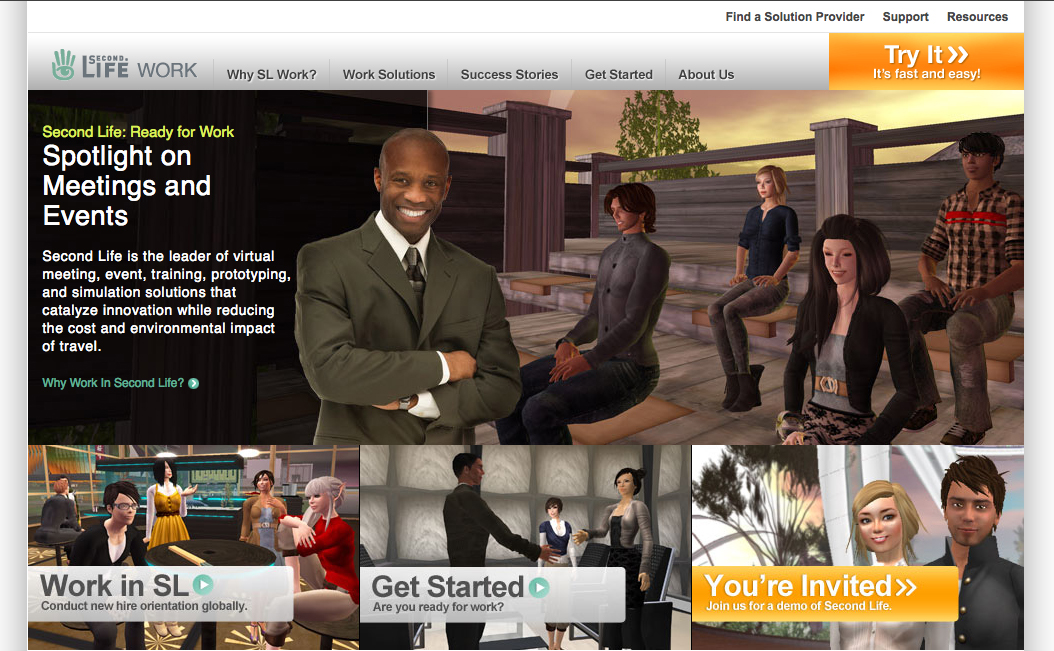
For those of us working with enterprise clients, the new page is a welcome relief from what came before - highlighting the cross-reality utility of virtual worlds, and focusing on benefits that people can understand. My primary complaint is with the photos - they really need to get someone who can take better in-world photography. And as someone who works in design, you can spot stock photography a mile away - and those happy smiley culturally diverse arms-crossed (meaning, they’re serious but in a happily productive way) people are, well, stock.
But that’s a quibble.
On a sub-page, Linden Lab calls 2009 a break-out year for virtual collaboration. And I couldn’t agree more - we’re having an incredible response from companies who, a year ago, would have snickered at an avatar picture. Now, the response is more typically “wow, yes, I want that”.
Nice to see the Web strategy at the Lab unfolding - now, if they back that up with the kind of marketing and advertising campaign that Second Life deserves, maybe we’ll see growth on both the enterprise and the more general use of the Grid.



[…] Dusan Writer’s Metaverse » Linden Lab’s Grid for Business: It’s All Work […]
[…] Linden Lab’s Grid for Business: It’s All Work […]
[…] Dusan Writer’s Metaverse » Linden Lab’s Grid for Business: It’s All Work – Virtual worlds and creativity, business, collaboration, and identity. […]